The economy of a small beach town is one of the more curious things in modern capitalism. For roughly six months of the year, the town is full of money. For the other six, it is essentially closed. Everyone has to make a year's living in a single summer.
This shapes everything about how the town works — what kinds of businesses survive, why prices spike, what the locals actually do in winter.
The summer economy
From around May to September, the population of a typical British or American beach town can multiply by five or ten. Restaurants run double shifts. Cafes stay open from breakfast until well after dinner. Hotels are full. Holiday rentals are booked solid. The high street pavement becomes nearly impassable.
This is when the town earns. A single good summer pays the year's mortgage for the publican, the fishmonger, the surf school operator. The trade-off is twelve weeks of brutal work — sixteen-hour days, no weekends, staff shortages every year, and the constant low-grade stress of trying to capture every possible pound before the weather turns.
Prices are higher in summer because they have to be. The fudge shop is not gouging — it is trying to pay the rent that will continue through January, when nobody is buying fudge.
The winter economy
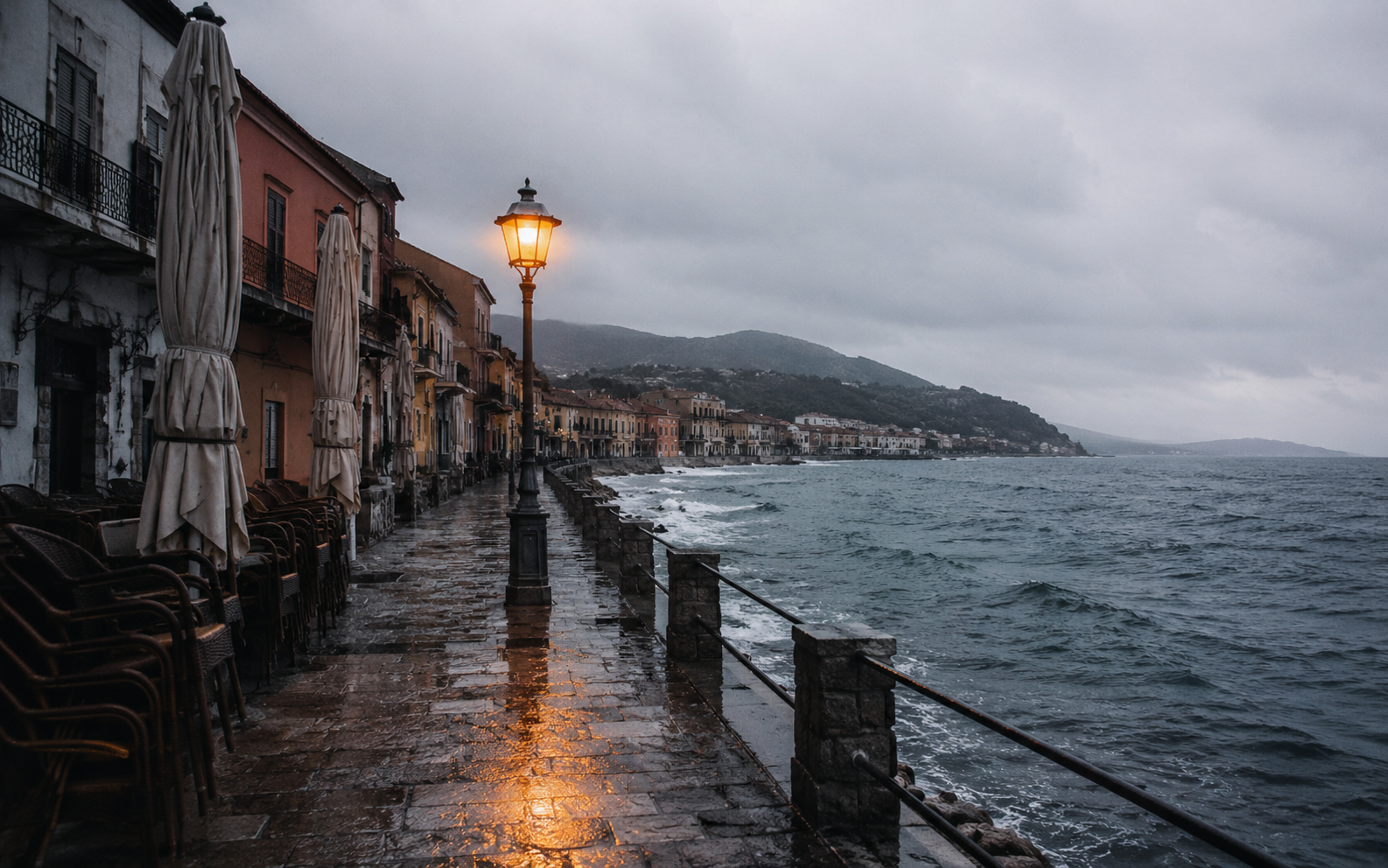
From October to April, most beach towns become a different place entirely. Half the restaurants close. Some pubs reduce to weekend-only hours. The amusement arcade boards up. The shops that sell beach toys and inflatable rings either pivot to selling something else or shut entirely.
What remains is a small community living quietly. The locals see each other in the same handful of open pubs. There is more space for conversation, more time for projects, more attention paid to the few visitors who come anyway. The basic geography of coastal communities has shaped this pattern for centuries — short, intense seasons of activity followed by long quiet stretches.
The housing problem
The economic logic of the summer-only town has produced a serious housing crisis in many places. Properties earn more as short-term holiday lets than as long-term residential rentals, so the housing stock gradually shifts away from full-time residents. Locals get pushed out. The school loses pupils. The hairdresser closes because there aren't enough year-round customers.
Some councils have started imposing restrictions — second-home taxes, holiday-let licences, planning rules that limit conversions. The results are mixed. The underlying economics are stubborn.
What survives
The businesses that endure in small beach towns tend to be either (a) absolutely essential — the doctor, the petrol station, the small supermarket — or (b) clever enough to have a winter income stream. The pub that does pub quizzes for locals all winter. The restaurant that does a £25 set menu for residents only on Tuesdays. The cafe that runs writing workshops in February.
The best small beach towns are the ones with enough year-round community to keep the lights on through the quiet months. Without that, the place gradually hollows out into a kind of holiday simulation — open in July, dead in March, never really a town at all.
Visiting in winter
For travellers, the winter version of a beach town is in some ways the more interesting one. You see what is actually there underneath the summer veneer. The locals have time to talk to you. The few open restaurants are not running on auto-pilot. The town becomes a community again, briefly, before the cycle restarts.