The first time I asked a fisherman in Cornwall what time he ate dinner, he laughed at me. "Whatever time the tide says," he replied. It was the kind of answer that makes no sense in a landlocked life and perfect sense in a coastal one.
Coastal communities live by a calendar that the rest of us have largely forgotten — the lunar one.
The tide is a clock
Most coastal places have two high tides and two low tides every day, but the timing shifts by roughly 50 minutes each cycle. Over a fortnight, the high tide that was at breakfast time gradually moves to midday, then to dinner. Anyone whose work depends on the sea — fishermen, sailors, oyster farmers, surf instructors — plans their week around this slow-moving clock.
This is why local restaurants in fishing villages have less predictable opening hours than tourists expect. The chef may also be a part-owner of a boat, and when the tide is right for the catch, the boat takes priority.
What changes through the moon cycle
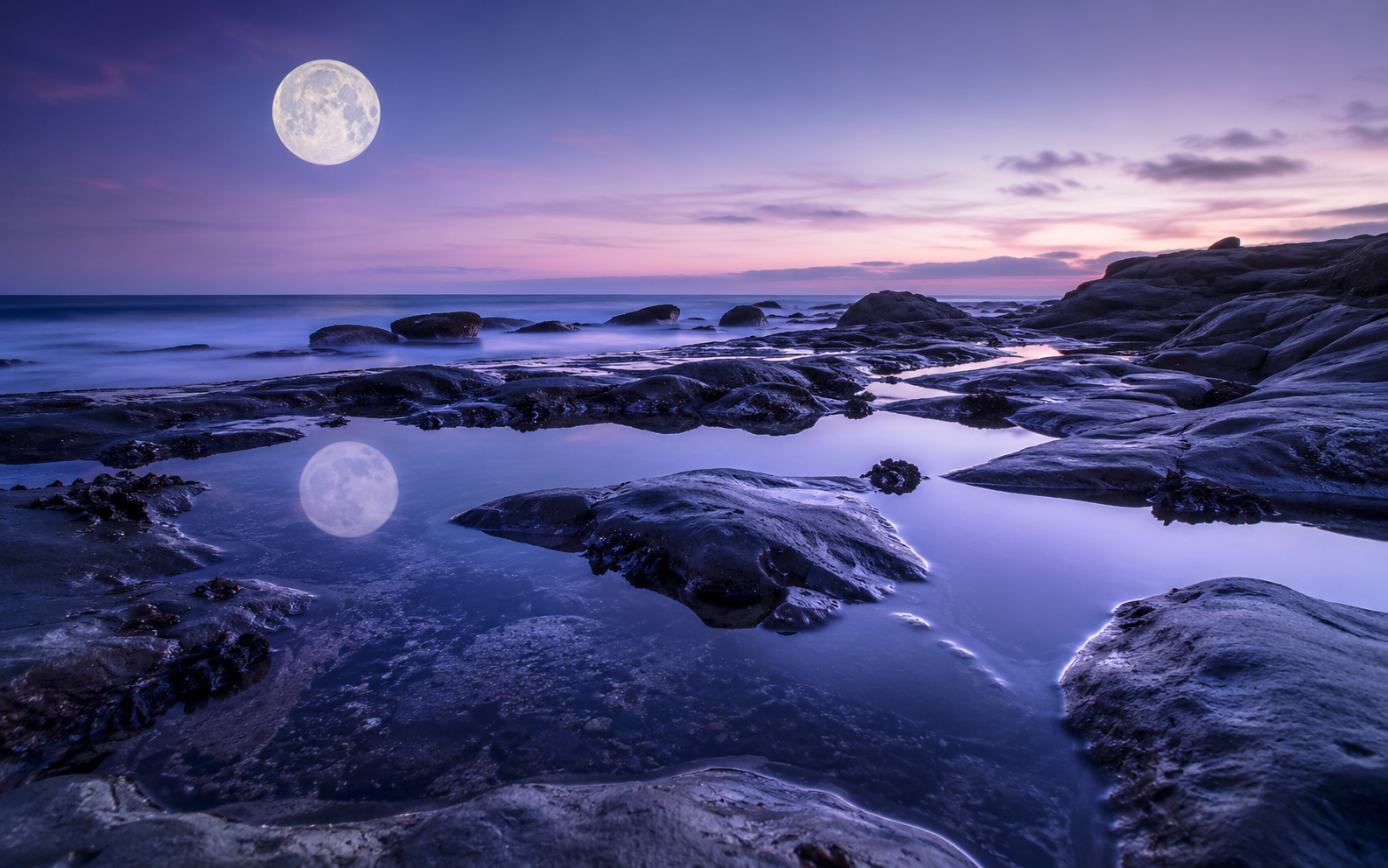
Around the full moon and the new moon, the tides become exaggerated — spring tides. Low tide goes lower than usual; high tide goes higher. Beaches you cannot reach for most of the month suddenly open up at low water. Caves become accessible. Shellfish that hide deeper in the sand can be foraged.
The opposite happens around the half-moon — neap tides. The water barely seems to move. Some harbours dry out less than usual. Some surf breaks become flat. Locals know which days of the lunar cycle are good for what activity, and they plan accordingly.
Why visitors miss it
Most travellers arrive at a coastal destination with their internal clock set to the wrong rhythm. They want dinner at seven, breakfast at eight, an afternoon swim at three. The tide does not care.
You arrive at the beach and the water is somewhere you cannot reach, hidden behind a long stretch of mud. You walk down to the harbour wall and the fishing boats are leaning sideways on the floor of an empty inlet. Locals shrug and say "tide is out" the way someone in a city might say "rush hour."
Planning around it
A printed tide table — or any free tide app — transforms a coastal holiday. You learn that the cove with the natural rock pool is only fun within two hours of low tide. You discover that the harbour restaurant looks magical at high water and like a building site at low. You schedule your sea swim for when the water will be deepest at the steps.
The point is not that the tide makes the coast difficult. It is that the tide is the coast. Once you start planning around it, you start understanding why locals live the way they do — and you stop fighting against a rhythm that has been running for several billion years.